From Overwhelmed to Supported: How Little Memory Care Homes Assist Elders Thrive
Business Name: BeeHive Homes of Levelland
Address: 140 County Rd, Levelland, TX 79336
Phone: (806) 452-5883
BeeHive Homes of Levelland
Beehive Homes of Levelland assisted living care is ideal for those who value their independence but require help with some of the activities of daily living. Residents enjoy 24-hour support, private bedrooms with baths, medication monitoring, home-cooked meals, housekeeping and laundry services, social activities and outings, and daily physical and mental exercise opportunities. Beehive Homes memory care services accommodates the growing number of seniors affected by memory loss and dementia. Beehive Homes offers respite (short-term) care for your loved one should the need arise. Whether help is needed after a surgery or illness, for vacation coverage, or just a break from the routine, respite care provides you peace of mind for any length of stay.
140 County Rd, Levelland, TX 79336
Business Hours
Families hardly ever start their look for senior care from a place of calm. Regularly, it starts after a scare: a midnight fall, a pot left burning on the range, a parent who roamed three streets over and might not find the method back. By the time somebody states, "We require aid," the family is already exhausted.
That is usually when the big buildings appear on the radar. Large assisted living neighborhoods with grand lobbies, several dining rooms, and shiny sales brochures are highly noticeable. Small memory care homes, typically in quiet neighborhoods and converted single household houses, rarely market as loudly. Yet for lots of older grownups coping with dementia, these little homes are where real recovery and growing begin.
I have viewed both courses up close. I have seen citizens closed down in environments that were too loud, too hurried, and too unfamiliar. I have also seen somebody who had actually stopped speaking start to hum along to a tune in a calm, 10 bed memory care home kitchen while helping to stir cookie dough. The distinction is not magic. It has to do with scale, structure, and attention.
This article looks carefully at how little memory care homes work, who they serve best, and what trade offs families ought to understand before they choose.
What "small" really indicates in memory care
The term "little" can be slippery in senior care marketing. Some companies explain a 60 resident building as "intimate." For clarity, let us define a little memory care home as a residence that typically serves in between 6 and 16 senior citizens, typically in a house or cottage that seems like a regular home.
You may see them called residential care homes, board and care homes, group homes, or small assisted living. Licensing classifications differ by state, but a couple of common functions typically show up:
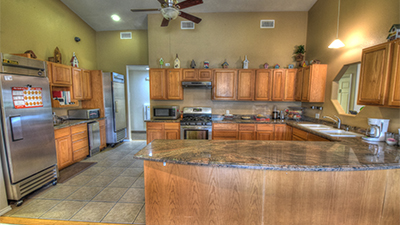
Residents share a real living-room, not a hotel design lobby. Meals are cooked in a normal kitchen, frequently within view of where homeowners spend their day. Bed rooms might be private or semi private, however corridors are short and sightlines are clear, which matters a great deal for dementia care.
The smaller sized size does not just change the appearance of the location. It alters the relationships inside it.
In large assisted living or memory care neighborhoods, it is not uncommon for a caregiver to be accountable for 10 to 14 residents throughout a day shift, and a lot more during the night. In a small home, ratios of 1 to 4 or 1 to 5 during waking hours prevail in well run operations. That distinction shows up in everything from how long someone waits to utilize the restroom to whether personnel notice that a resident stopped consuming dessert this week, even though it used to be the favorite part of the meal.
Why scale matters a lot in dementia care
Dementia impacts more than memory. It alters how someone processes visual info, noise, and movement around them. People who used to handle a congested restaurant without blinking may now feel overloaded by a hectic dining hall. Long corridors, patterned carpets, and constantly changing staff can end up being a blur.
In that context, a little memory care home has numerous built in advantages.
First, there is consistency. With a restricted number of residents, the staff team tends to be smaller sized and more stable. The very same 3 or four caretakers are present day after day. Residents with dementia often recognize faces and voices long after they forget names. Familiarity reduces stress and anxiety. When a resident wakes from a nap puzzled, seeing the same caretaker they saw at breakfast can make the distinction between a calm redirection and a complete panic.
Second, the environment is simpler and simpler to browse. One or two common locations, an open kitchen, and clearly marked restrooms reduce the number of decisions a resident should make to move through the day. Even simple details matter: a white toilet seat against a tan flooring, a contrasting plate color that makes food noticeable, a front patio where somebody can sit without the threat of wandering off school unnoticed.
Third, routine ends up being a natural rhythm instead of a stiff schedule. In large structures, jobs should be batched to stay effective. Breakfast is "from 7 to 8:30," showers are designated to specific days, and staff should press to keep everybody on time. In a small home, there is more room to honor individual patterns: the late riser who desires coffee at 9:30, the early bird who likes to fold towels at dawn, the person who always washed meals after dinner and still discovers comfort in that task.
None of this erases the development of dementia. It does, however, lower the everyday friction that so frequently causes agitation, "habits problems," or overuse of sedating medications.
Moving from crisis management to authentic support
Families normally start searching for care since something has gone wrong. A mother who constantly dealt with costs paying all of a sudden starts missing out on payments. A father with early Alzheimer's gets lost while driving a familiar path. A spouse can not provide 24 hr supervision any longer. At that stage, it is natural to believe in terms of risk control: preventing falls, avoiding medication errors, stopping wandering.
Small memory care homes deal with those safety concerns, however their stronger value lies in a more human question: How can this individual still live a reality, inside their new limits?
One daughter I worked with had actually been taking care of her 82 years of age father at home for three years. He had moderate dementia and Parkinson's. She was increasing at 5 a.m. To assist him out of bed, handling his medications, handling the financial resources, and holding a part-time job. By the time she called for aid, she was sleeping in 90 minute pieces and crying in the kitchen so he would not see her. She informed me, "I just need a location where he will be safe."
He moved into a small, 10 resident memory care home not far from their neighborhood. Security requirements were fulfilled rapidly: grab bars, supervision, medication administration, monitored exits. What struck the child 2 weeks later on was not the devices. It was strolling in one afternoon to find her father sitting at the kitchen area table with 2 other homeowners, thoroughly snapping completions off green beans. He was talking with a caregiver about the garden he utilized to keep.
"He has not looked that engaged in a year," she stated. "I thought we were made with that part of him."
The shift from overwhelmed to supported takes place for households along with residents. When a reputable group shares the minute by minute duty, spouses and adult kids can end up being visitors once again rather of exhausted full time caregivers. That reset typically repairs strained relationships. The daughter could now sit and check out old photo albums with her dad without stressing over his next dose of medication.
How small homes differ from traditional assisted living
Many families ask whether a loved one need to move into general assisted living or particularly into memory care. The response depends on the person's requirements, their stage of dementia, and their personality long before they had any cognitive decline.
Assisted living is normally developed for senior citizens who require aid with some activities of daily living, such as bathing, dressing, or managing medications, but who do not have severe roaming or behavior issues. Homeowners might have mild cognitive impairment or extremely early dementia, yet still operate independently in many ways.
General assisted living settings typically have:
Large communal dining rooms with set meal times. Scheduled group activities like bingo, films, or getaways. Houses with kitchenettes and locking doors. Variable staff training in dementia care.
In contrast, dedicated little memory care homes are customized to people who have moved even more along the dementia spectrum. They focus on guidance, structure, and cueing. Doors are usually protected, numerous products are streamlined for security, and stimulation is purposefully moderated.
Key differences in daily life consist of the way activities are incorporated. In a large assisted living structure, activities are normally set up by an entertainment director and occur at set times in particular rooms. In a small home, much of what would be called "activities" just occurs alongside day-to-day tasks: folding laundry together, shredding lettuce, determining sugar, sweeping a patio, listening to old music while staff prepare snacks.
Families in some cases fret that a small home will mean fewer formal events. What often disappears are the loud, crowded events that lots of locals with dementia could not genuinely follow anyway. In their place come multiple small, sensory rich minutes that match a resident's attention span and energy level.
That stated, there are trade offs. Bigger assisted living or memory care communities might use on site physical treatment, larger outside areas, or specialized programs for art and music led by outdoors experts. For friendly citizens in earlier phases of dementia, that range can fit them well. Some families begin in large assisted living with a memory care wing, then move to a smaller sized home when the disease advances and the environment ends up being overwhelming.
The emotional climate: quieter, however not silent
A well run small memory care home has a particular sound. You see some soft discussion, a radio with standards or oldies in the background, the sizzle of something cooking, maybe a bird feeder outside the window. You do not hear chairs scraping in a hundred seat dining room, or intercom statements, or a vacuum running constantly.
For many individuals with dementia, that quieter background lets them stay present. They can track a discussion. They are less startled by unexpected sounds. Corridors are brief, so a resident calling out is heard and responded to quickly rather than echoing unanswered.
The quieter environment also impacts staff. Caregivers are better to one another, not spread out across several floors. Supervisors can see and hear what is taking place in genuine time. That intimacy produces responsibility. A frazzled assistant in a substantial structure can feel anonymous and unsupported. In a 10 person home, frustration is discovered rapidly and attended to before it becomes burnout.
The emotional environment does depend greatly on the leadership. A little home can feel warm and familial, or tense and controlling, depending on how the administrator treats both locals and personnel. When you tour, pay as much attention to body movement and tone regarding décor. Staff who gently redirect a confused resident, who know the story behind the wedding event picture on the bedside table, and who joke kindly with one another are strong indicators of a healthy culture.
Respite care in small memory homes
Not every household is ready for a permanent move. Some are testing the waters of senior care. Others just require a break to rest, travel, or deal with medical issues of their own. This is where respite care comes into the picture.
Respite care is short term, typically anywhere from a few days to numerous weeks. A little memory care home that uses respite can provide households a safeguarded trial period. The resident gets utilized to a new environment, and the staff learns their habits and choices, without the psychological weight of "this is forever."
I frequently encourage households to use respite care before everybody remains in crisis. A week long stay after a planned surgical treatment for the primary caregiver is a lot easier on the resident than an emergency situation admission after their caretaker collapses from exhaustion. It also provides the household a clear sense of how their loved one does with structured dementia care: Does wandering reduce? Does sleep improve? Exist fewer mad outbursts when personal care is supplied by someone outside the family?
Many partners return from that very first respite stay surprised by the modification in their own body. They sleep deeply for the first time in months. Their blood pressure boils down. Their patience returns. When they get their loved one at the end of the respite period, they can see more plainly what the future needs, whether that suggests ongoing home care, another respite in a couple of months, or a relocation into long term care.
When researching respite care options, ask very particular questions: Is the respite guest consisted of in all activities or kept separate? Are there additional fees beyond the everyday rate? How are medications managed, specifically if there are as needed prescriptions for stress and anxiety or agitation? In a small home, respite areas can be limited, so planning ahead matters.
Signs a little memory care home might be the right fit
Families sometimes hesitate to move toward what seems like a more "intensive" setting such as memory care. They hope assisted living with some additional support will be enough, or that more hours of in home help can solve the problem. There is no one response, but particular patterns suggest that a little memory care home could be worth major consideration.
Here are a few of the common indications:
- The person has roamed or tried to leave home, and supervision is required around the clock.
- Bathing, dressing, or toileting regularly lead to arguments or physical resistance, even with familiar caregivers.
- The existing assisted living setting is providing cautions or suggesting that they "might not be proper" for the level of care offered.
- The main caretaker is sleeping badly, feels unable to leave the house, or is ignoring their own medical needs.
- Hallucinations, serious stress and anxiety, or late day agitation ("sundowning") are increasing, and rerouting in your home is no longer working.
None of these immediately implies a relocation must occur tomorrow. They do, however, signal that the existing plan is stretching everybody to the limitation. Visiting a few small homes before things reach a boiling point gives you more choices and more time to weigh them.
What excellent dementia care appears like in a small setting
Quality dementia care is not about having the fanciest structure or the latest electronic devices. In small memory care homes that really assist residents thrive, several useful elements show up consistently.
Care is embellished, not one size fits all. Staff know who is relaxed by folding towels, senior care who reacts best to music from the 1950s, who requires an extra snack before bed to sleep well, and who prefers a bath to a shower. That understanding is documented, shared throughout shifts, and upgraded as the illness progresses.
Communication is respectful and concrete. Rather of "Do you wish to get dressed now?" which can overwhelm somebody with options, you hear "Let us put on your blue shirt, then we will have breakfast." Staff do not argue with misconceptions. If a resident is persuaded they need to get their kids at school, an excellent caretaker might say, "The school called, and they are staying for an additional activity. Let us have some tea while we wait," then shift to a familiar task.
Risk is managed, not erased. Complete safety is not practical for anybody. In a little home, the goal is affordable security with meaningful life. That might suggest allowing a resident with moderate dementia to help in the garden with guidance, even if there is a minor threat of tripping, rather than parking them in front of the tv all afternoon.
Families are partners, not spectators. Staff routinely request stories about the resident's past, favorite routines, or household customs. Pictures and life history boards are utilized as discussion prompts. Families are welcomed to join for meals or activities when they can, and their observations are taken seriously in care planning.
When those components line up, little memory care homes can support unexpected moments of delight: a former curator reading aloud from a familiar book, a retired nurse assisting to "train" a new employee in taking a pulse, a long-lasting gardener deadheading flowers on the patio.
Questions to ask when visiting little memory care homes
Brochures and sites will just tell you a lot. The real test is what you see, hear, and feel when you stroll through the front door. To make your visits more efficient, it assists to have a succinct set of questions that cut through marketing language and get at daily reality.
Consider asking:
- What is your typical staff to resident ratio on days, nights, and nights, and who is in fact in the building throughout those times?
- How do you train staff in dementia care, and how typically do they receive continuous education?
- Can you describe how a normal day unfolds for someone at my parent's stage of dementia, from awakening to bedtime?
- How do you manage medical issues after hours, and which doctors or nurse practitioners are familiar with your residents?
- How do you include households in care choices, and how will you interact with me if something changes?
While you ask, observe quietly too. Do staff call citizens by their preferred name? Are people worn clean, seasonally proper clothes? Do you see homeowners being gently encouraged to consume, or are plates left unblemished? Is there a smell of urine that recommends persistent incontinence concerns are not handled well?
Your impulses matter. If you leave a tour with a tight sensation in your stomach, even if everything sounded fine on paper, take notice of that. Alternatively, if you discover yourself breathing out and thinking, "I could sit here with my mom and have coffee," that is also helpful data.
Balancing cost, gain access to, and values
Cost is typically the hardest useful piece. Small memory care homes can be comparable to, or sometimes somewhat more costly than, larger assisted living communities that provide memory care systems. They hardly ever accept Medicaid in the early phases of a stay, though some will permit homeowners to transform once they have actually lived there for a specific duration and a bed is available.
Families also need to think about geography. A stunning little home an hour away might look enticing, however range wears on both citizens and visitors. Being able to drop in for thirty minutes after work, or bring grandchildren for Sunday afternoon visits, supports psychological health on both sides.
Values matter as much as features. Some households place a high concern on faith based environments. Others want a multilingual personnel. Some wish for a home that welcomes family pets, or has a strong focus on outdoor time. Clarifying what genuinely matters to your loved one, and to you, will assist narrow the field.
Where small homes shine is alignment between environment and the truth of dementia. The closer a setting matches the person's present capabilities and requirements, the more room there is for comfort, self-respect, and little daily pleasures.
From making it through to living
Caring for a loved one with dementia is never ever easy. Even the best small memory care home will not erase the sorrow of seeing someone change, or the difficult choices along the way. What it can do, at its best, is relocation everyone from consistent crisis management into a more sustainable, humane rhythm.
For the resident, that might appear like days filled with routine, mild business, and work that feels purposeful, even if it is just arranging napkins. For the family, it might suggest sleeping through the night, reclaiming their own medical consultations, or being able to bring grandchildren to visit without stressing that a boiling pot is ignored in the kitchen.
The shift from overwhelmed to supported does not come from one grand gesture. It comes from a hundred small, repetitive acts of care, delivered in a setting that is sized to observe them. Little memory care homes, when well chosen and well run, supply precisely that type of setting, where elders with dementia can still do more than exist. They can, within their altering world, truly thrive.
BeeHive Homes of Levelland provides assisted living care
BeeHive Homes of Levelland provides memory care services
BeeHive Homes of Levelland provides respite care services
BeeHive Homes of Levelland supports assistance with bathing and grooming
BeeHive Homes of Levelland offers private bedrooms with private bathrooms
BeeHive Homes of Levelland provides medication monitoring and documentation
BeeHive Homes of Levelland serves dietitian-approved meals
BeeHive Homes of Levelland provides housekeeping services
BeeHive Homes of Levelland provides laundry services
BeeHive Homes of Levelland offers community dining and social engagement activities
BeeHive Homes of Levelland features life enrichment activities
BeeHive Homes of Levelland supports personal care assistance during meals and daily routines
BeeHive Homes of Levelland promotes frequent physical and mental exercise opportunities
BeeHive Homes of Levelland provides a home-like residential environment
BeeHive Homes of Levelland creates customized care plans as residents’ needs change
BeeHive Homes of Levelland assesses individual resident care needs
BeeHive Homes of Levelland accepts private pay and long-term care insurance
BeeHive Homes of Levelland assists qualified veterans with Aid and Attendance benefits
BeeHive Homes of Levelland encourages meaningful resident-to-staff relationships
BeeHive Homes of Levelland delivers compassionate, attentive senior care focused on dignity and comfort
BeeHive Homes of Levelland has a phone number of (806) 452-5883
BeeHive Homes of Levelland has an address of 140 County Rd, Levelland, TX 79336
BeeHive Homes of Levelland has a website https://beehivehomes.com/locations/levelland/
BeeHive Homes of Levelland has Google Maps listing https://maps.app.goo.gl/G3GxEhBqW7U84tqe6
BeeHive Homes of Levelland Assisted Living has Facebook page https://www.facebook.com/beehivelevelland
BeeHive Homes of Levelland Assisted Living has YouTube page https://www.youtube.com/@WelcomeHomeBeeHiveHomes
BeeHive Homes of Levelland won Top Assisted Living Homes 2025
BeeHive Homes of Levelland earned Best Customer Service Award 2024
BeeHive Homes of Levelland placed 1st for Senior Living Communities 2025
People Also Ask about BeeHive Homes of Levelland
What is BeeHive Homes of Levelland Living monthly room rate?
The rate depends on the level of care that is needed. We do an initial evaluation for each potential resident to determine the level of care needed. The monthly rate is based on this evaluation. There are no hidden costs or fees
Can residents stay in BeeHive Homes until the end of their life?
Usually yes. There are exceptions, such as when there are safety issues with the resident, or they need 24 hour skilled nursing services
Do we have a nurse on staff?
No, but each BeeHive Home has a consulting Nurse available 24 – 7. if nursing services are needed, a doctor can order home health to come into the home
What are BeeHive Homes’ visiting hours?
Visiting hours are adjusted to accommodate the families and the resident’s needs… just not too early or too late
Do we have couple’s rooms available?
Yes, each home has rooms designed to accommodate couples. Please ask about the availability of these rooms
Where is BeeHive Homes of Levelland located?
BeeHive Homes of Levelland is conveniently located at 140 County Rd, Levelland, TX 79336. You can easily find directions on Google Maps or call at (806) 452-5883 Monday through Sunday 9:00am to 5:00pm
How can I contact BeeHive Homes of Levelland?
You can contact BeeHive Homes of Levelland by phone at: (806) 452-5883, visit their website at https://beehivehomes.com/locations/levelland/,or connect on social media via Facebook or YouTube
Visiting Taqueria Guadalajara offers familiar Mexican comfort food that residents in assisted living, memory care, senior care, elderly care, and respite care can enjoy during relaxed dining outings.